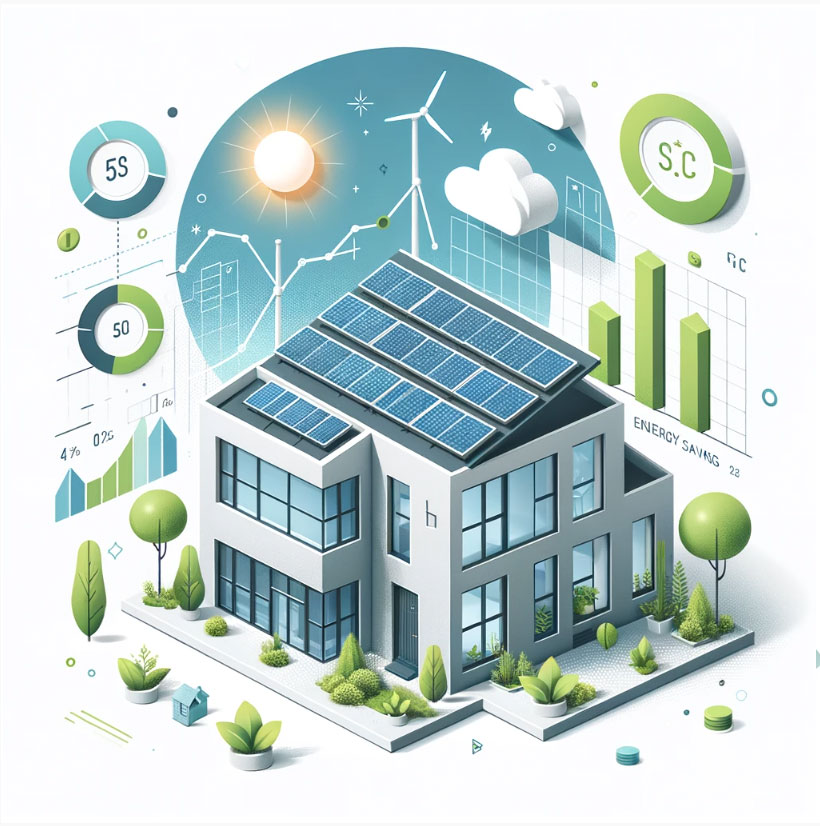
In a world where energy resources are becoming increasingly precious, improving the energy efficiency of buildings is essential for a sustainable future. One of the most effective ways to achieve this is by installing solar panels. This article explores the benefits of solar energy and how it contributes to the energy efficiency of buildings.
Reduced Dependence on the Electricity Grid
Through solar electricity generation, buildings become less dependent on the power grid and its pricing policies Solar energy allows building owners to produce their own electricity, thereby reducing long-term costs and protecting themselves against energy price fluctuations. This energy independence not only provides financial stability, but also contributes to a more resilient and sustainable energy system.
Minimal Maintenance.
A significant advantage of solar power plants is the absence of moving mechanisms and components. This means that the need for constant maintenance and periodic checks is considerably reduced. Unlike other energy systems, solar panels require very little maintenance, which translates into additional savings for owners. A simple periodic cleaning of the panels to remove dust and dirt is usually sufficient to maintain maximum system efficiency.
Improving the Energy Class of the Building
Installing solar panels can significantly improve the energy class of a building. Buildings that use renewable energy are rated more favorably in energy certifications, which can increase the market value of the property. In addition, a higher energy class can make it easier to obtain financing and subsidies for green projects.
Reduced Costs and Economic Benefits
In the long term, solar energy is one of the most cost-effective ways to meet energy efficiency goals, especially for new construction. The initial costs of installing solar panels are quickly offset by the savings made on energy bills. In many regions, there are also financial incentives and subsidy programs that make investing in solar energy even more attractive. Also, the surplus energy produced can be sold back to the grid, generating additional income.
Environmental Impact
The use of solar energy contributes significantly to reducing the building’s carbon footprint. Solar energy production does not emit greenhouse gases, making it an environmentally friendly alternative to traditional energy sources. Widespread adoption of solar energy can play a crucial role in combating climate change and promoting a cleaner, healthier environment for future generations.
Conclusion
Improving the energy efficiency of buildings through the use of solar energy is an important step towards a sustainable future. The multiple benefits, from reducing dependence on the electricity grid and long-term savings, to the positive impact on the environment and improving property value, make solar energy a viable and attractive solution for any building owner. By investing in solar panels, you not only benefit from a reliable and environmentally friendly energy source, but you also contribute to a greener and more prosperous future.


